Why Windshield Tint Is Worth It in Utah's Brutal Sun
Why Windshield Tint Is Worth It in Utah's Brutal Sun
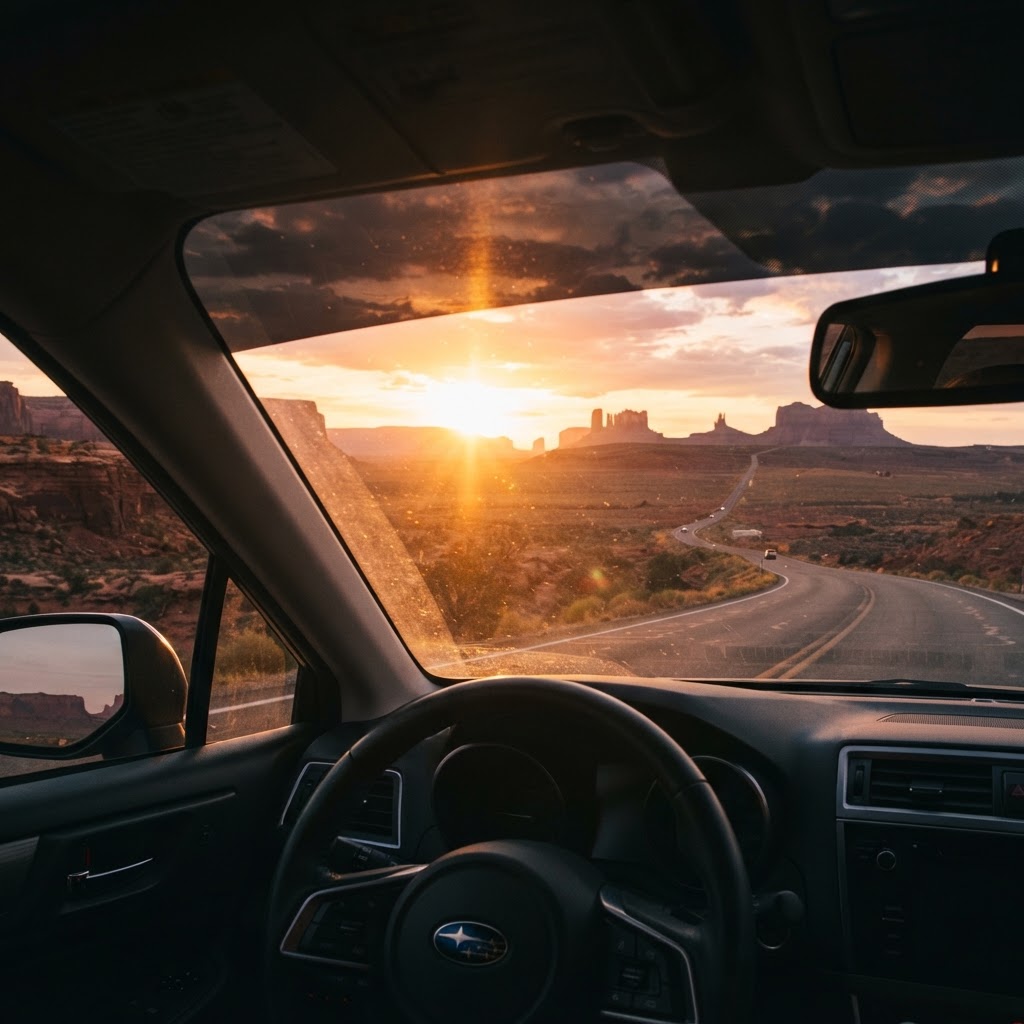
Utah sits at high altitude, which means the sun hits harder here than in many other states. If you've ever driven west on a summer evening in Lehi or Saratoga Springs, you know the glare can be blinding. A windshield tint — done legally — is one of the most effective upgrades for comfort and safety.
What's Legal in Utah?
Utah law allows a non-reflective tint strip on the top 4 inches of your windshield (the AS-1 line marked by the manufacturer). You can't tint the full windshield, but that strip sits right in your line of sight and blocks the sun when it's lowest and most blinding.
The Real Benefits
1. Cuts blinding glare. The visor strip sits exactly where the sun hits during early morning and late afternoon commutes. It dramatically reduces squinting and eye strain.
2. Rejects heat at the largest glass surface. Your windshield is the biggest piece of glass on your car. Even a legal strip blocks a meaningful amount of the infrared heat that would otherwise radiate onto your face and dashboard.
3. Protects your dashboard and interior. UV rays through the windshield are the #1 cause of dashboard fading, cracking, and leather deterioration. A tint strip — especially ceramic — blocks 99% of UV.
4. Protects your skin. The Skin Cancer Foundation notes that drivers get significant UV exposure through the windshield. Ceramic film carries their Seal of Recommendation.
Why a Visor Strip Is So Popular
It's legal, it's affordable, and it solves the single most annoying problem Utah drivers face: low-angle sun glare. Many of our clients add it even when they're not tinting the rest of the car.
The Best Film for Your Windshield
Because the visor strip is in your direct line of sight, clarity matters. Our Royal Protection nano-ceramic film is the best choice — it rejects up to 95% of infrared heat without any haze or signal interference, and it's optically clear so your vision stays sharp.